The body of work
95 plates.
17 chapters.
Every diagram, map, model and screen I made for these projects, enumerated. Hover any line to bring the plate up beside it — or open the chapter to read the argument it belongs to.
Hover a plate to see it here.
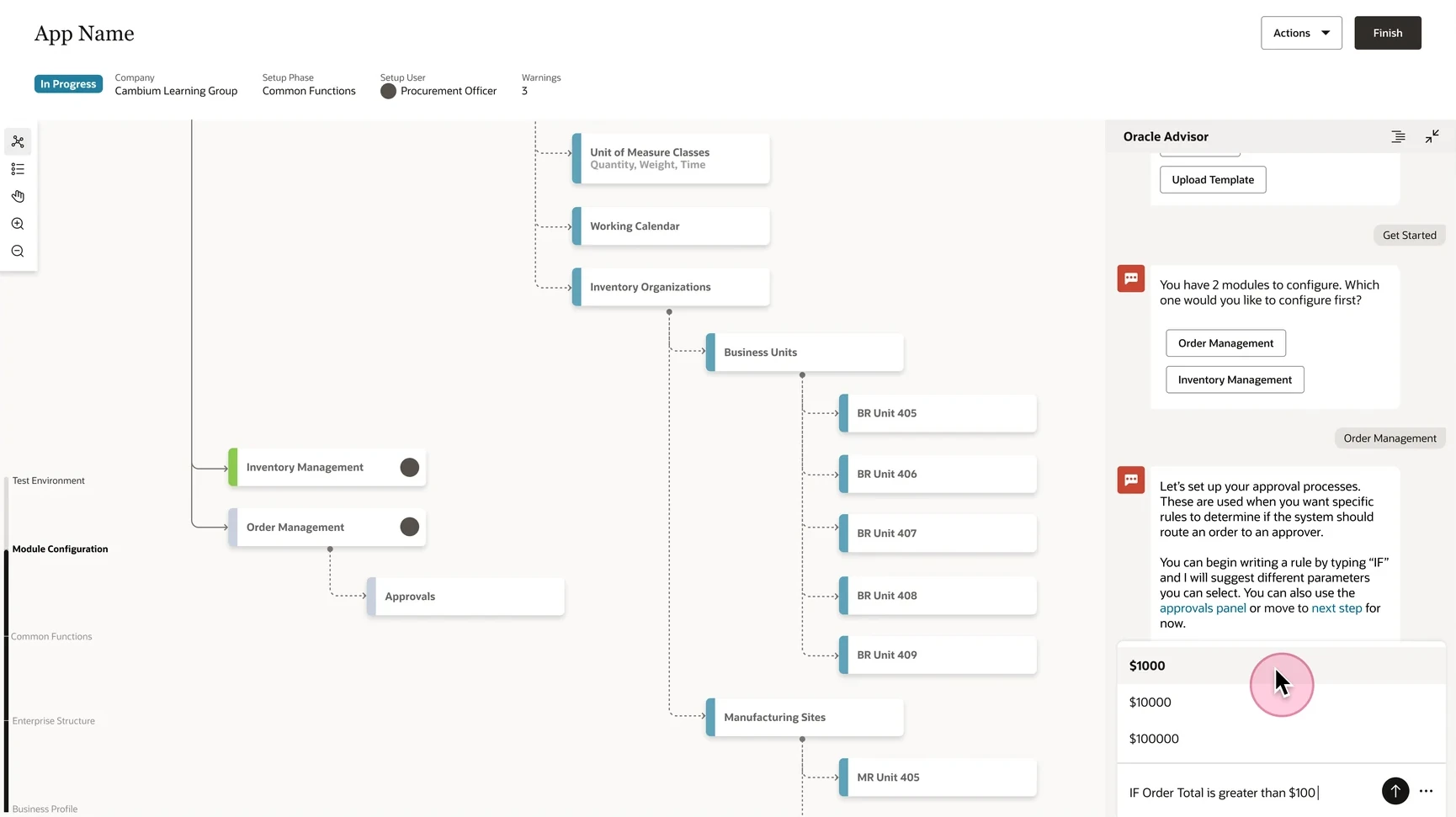
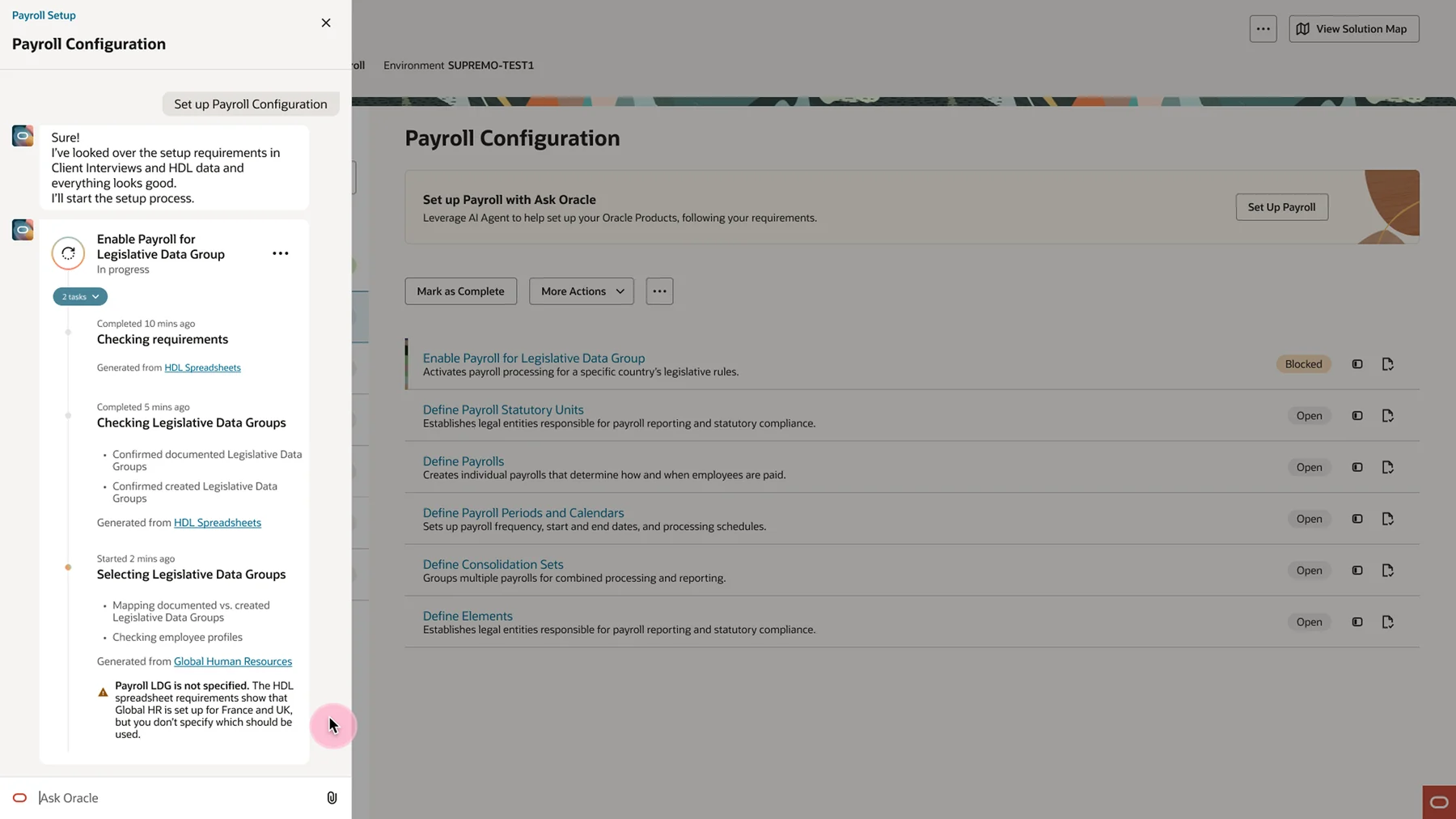
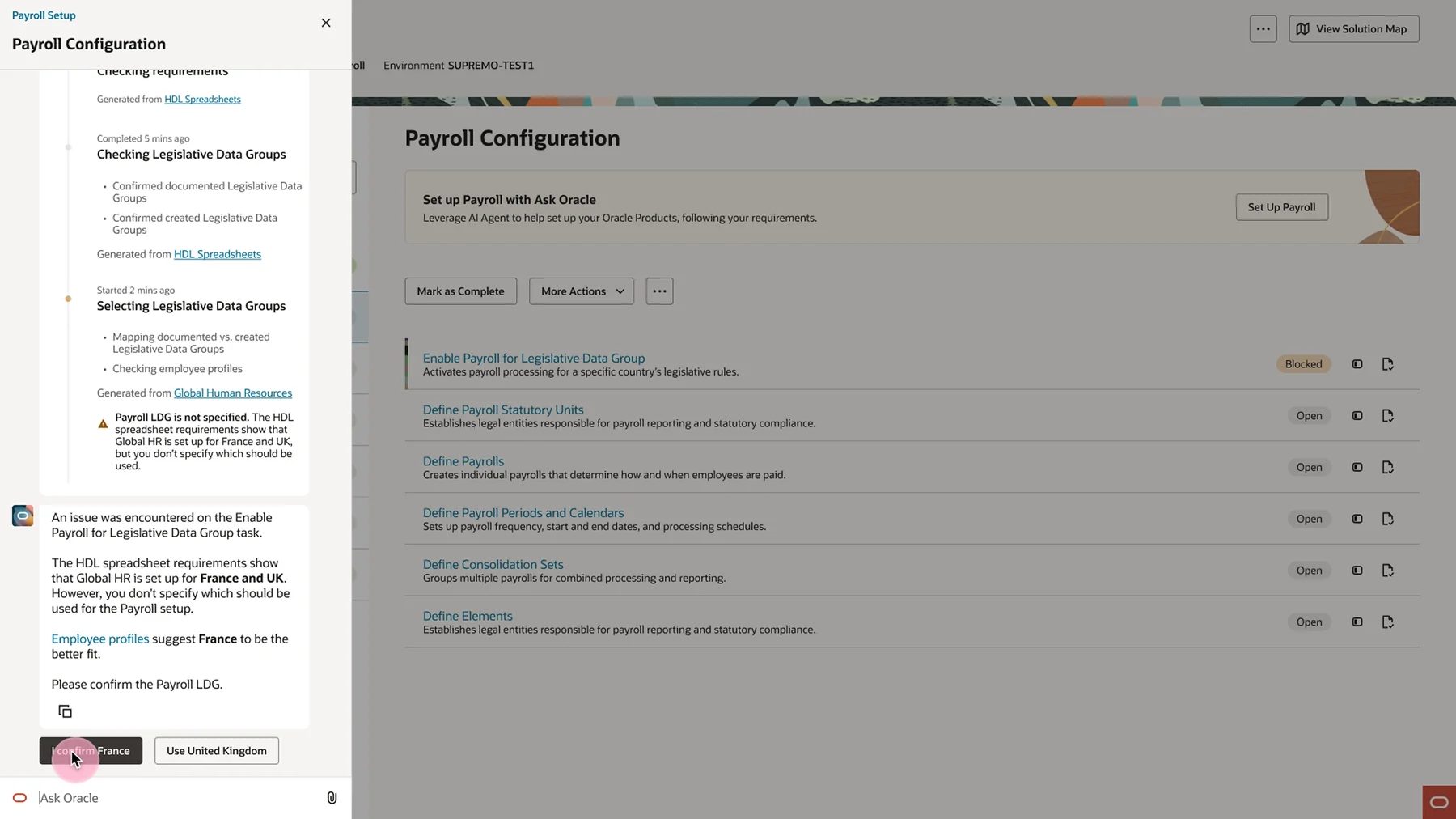
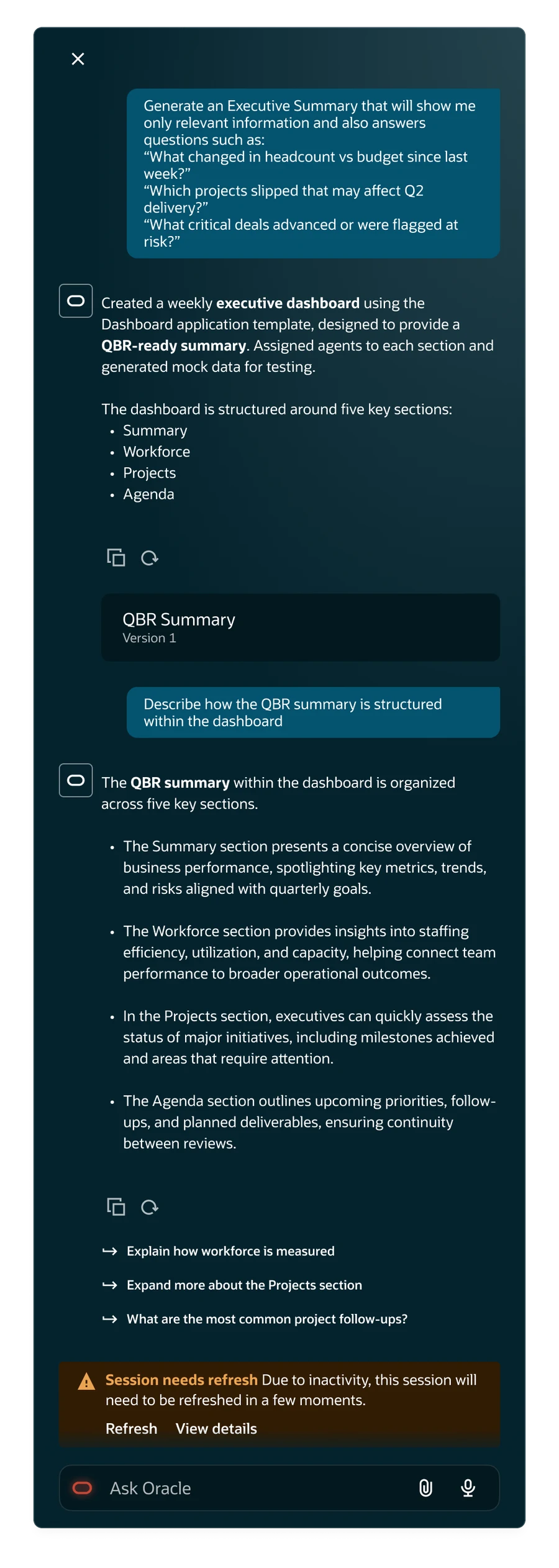
Pattern spec · AGT-01
In production · Fusion
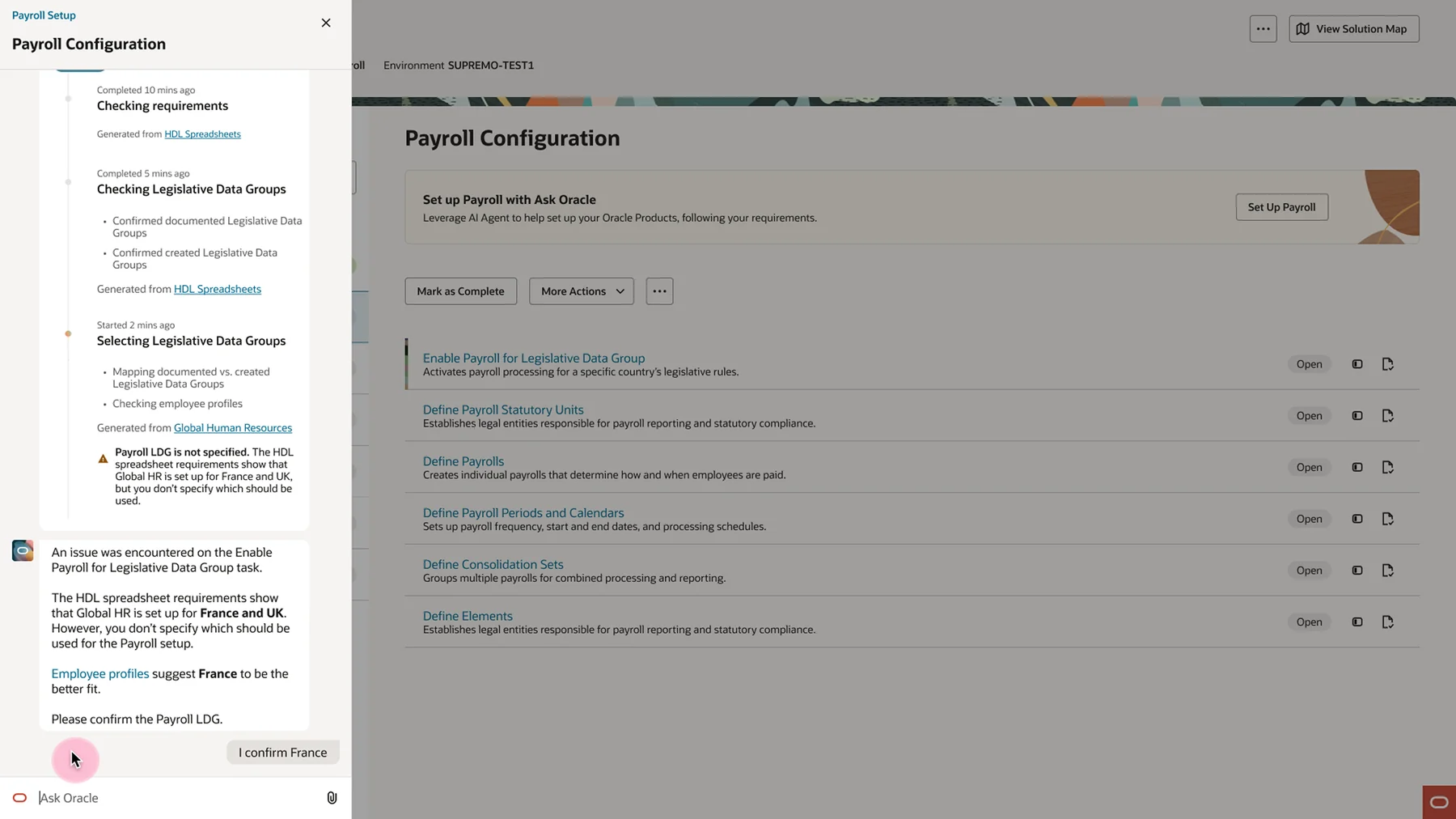
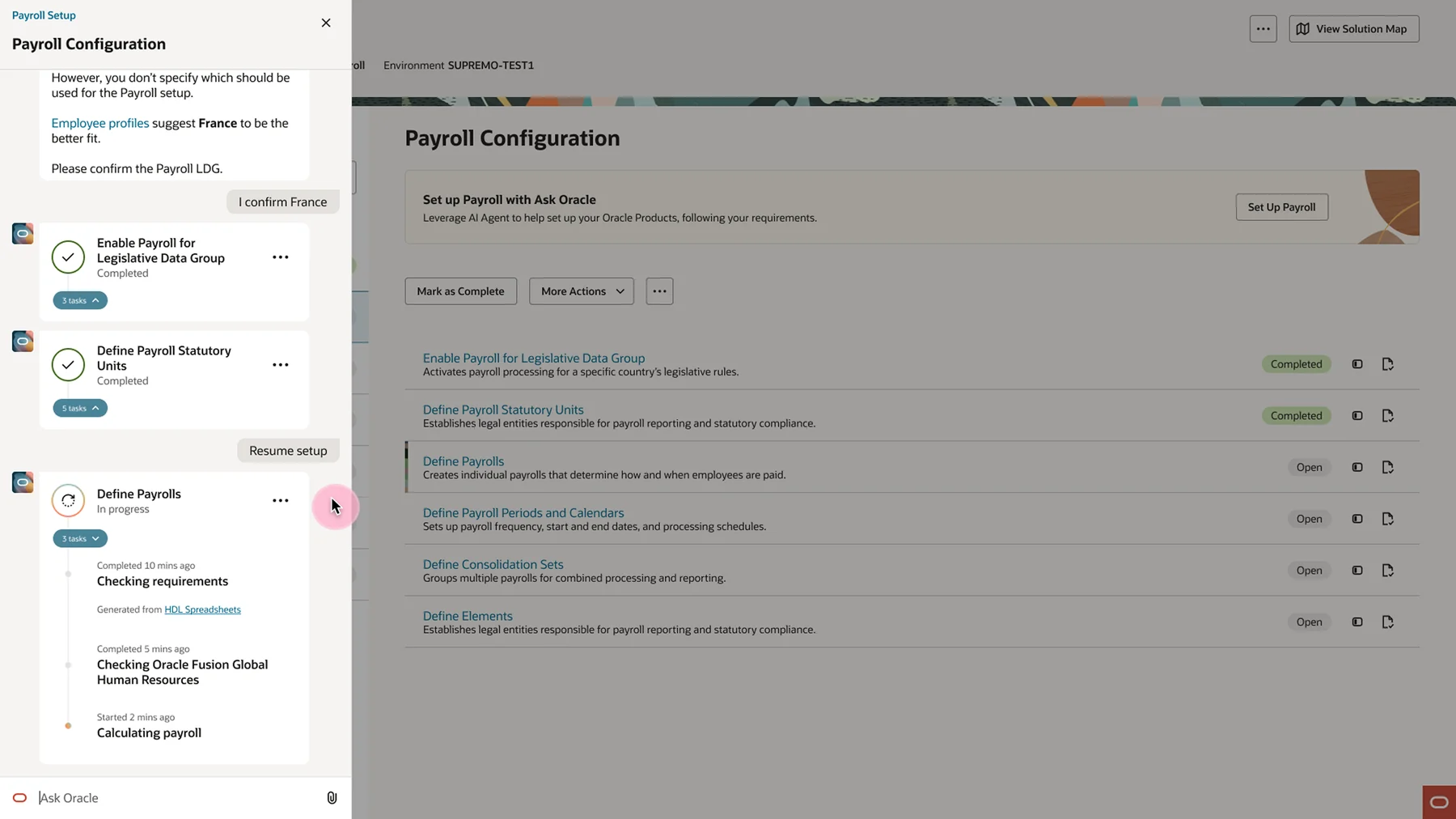
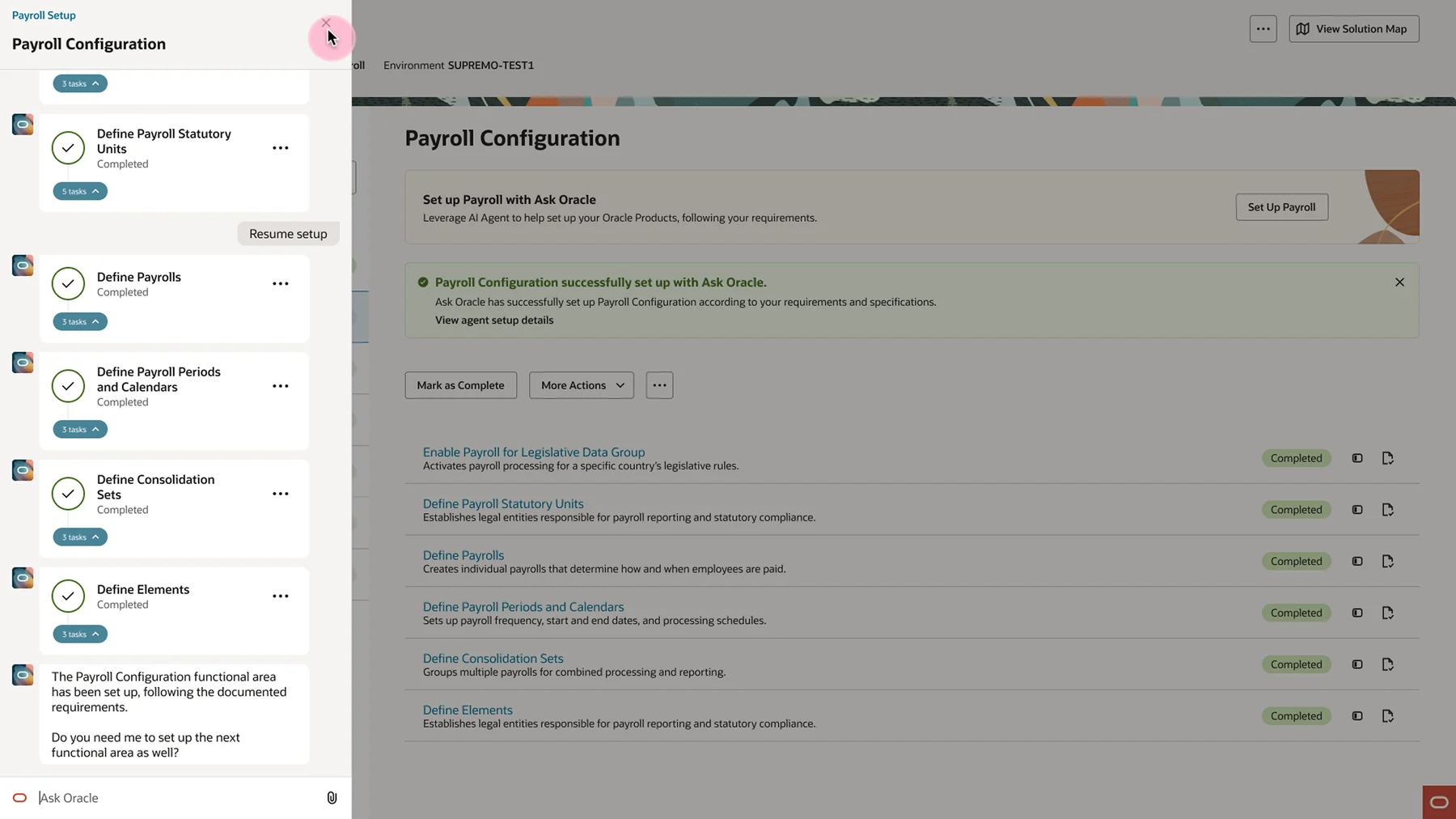
Each state carries its own evidence contract and its own audit rule.
Act
High certainty
- When
- Inputs are unambiguous and one action is defensible.
- Agent
- Completes the task on its own, streaming a work log, every action with its data source.
- Human
- Watches the log, and can interrupt at any step.
- Audit records
- The action, attributed to the agent, with evidence attached.
Propose
Valid alternatives
- When
- More than one path is valid.
- Agent
- Recommends one option with its evidence, and keeps the alternatives in view.
- Human
- Confirms in one tap, or picks another path.
- Audit records
- The decision, attributed to the person who confirmed it.
Stop & ask
Missing or conflicting data
- When
- Required data is missing, or two sources conflict.
- Agent
- Halts, names what it needs, and surfaces candidate answers with its analysis.
- Human
- Supplies the answer, and the work resumes from that point.
- Audit records
- The input, attributed to the person who supplied it.
The audit trail names a person at every step. The model started on Fusion Setup, other Fusion teams reuse it, and it's encoded as Codex skills.
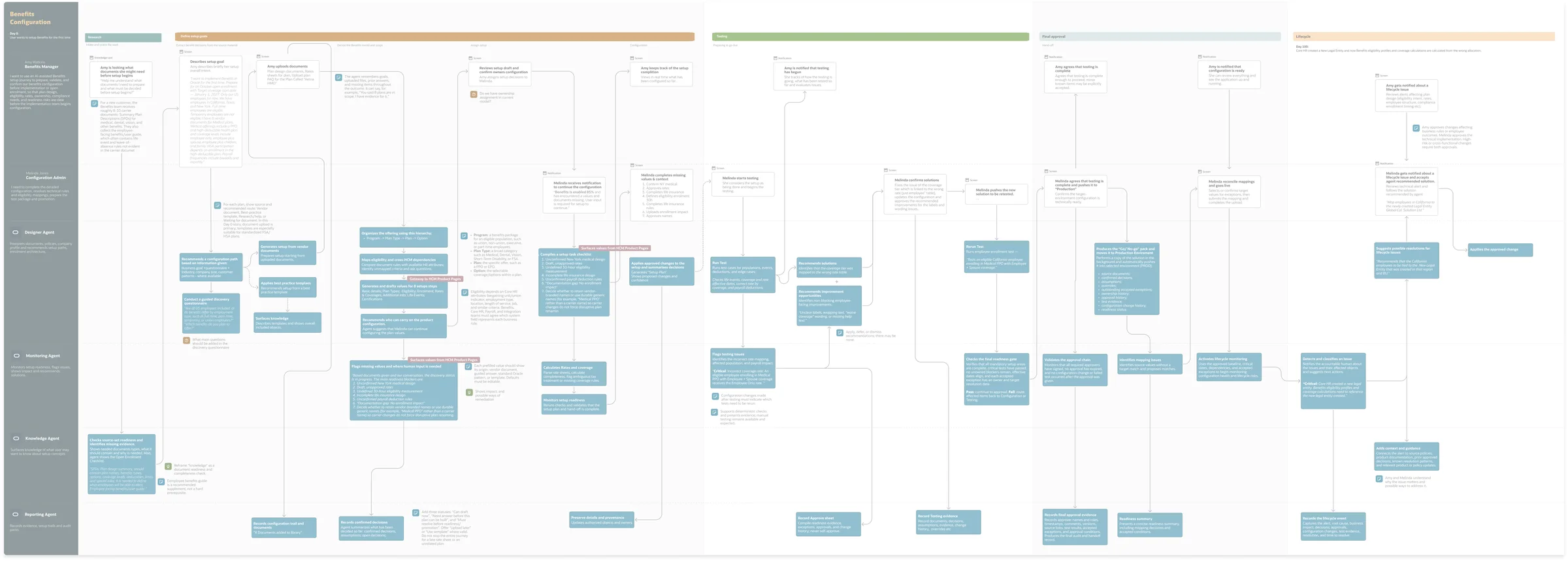
System diagram · DS-01
Standards as code
A pattern in Figma is a suggestion. A pattern in the pipeline is a decision already made. The route from one to the other, as built for the Codex skills library.
-
01 · Pattern
A behavioral commitment
Not a button and a modal, the rules underneath: when to act alone, what evidence streams, how a refusal sounds, where the human decision lands.
-
02 · Skill
Encoded once, executable
- pattern
- propose-confirm
- streams
- work-log + sources
- confirm
- one tap, named human
- refuses
- averaging red grades
Written down once as a Codex skill, instead of re-taught in every review.
-
03 · Prototype
Accurate by construction
Anything built from the library uses the real components, real autonomy rules, real evidence format, before an engineering estimate exists.
-
04 · Product
Correct by default
The compliant pattern is what every team gets without asking. Deviating takes deliberate effort, which is the right way around.
The loop back: watch patterns in the wild for reuse, overrides and drift. A pattern that stops earning its place gets redesigned or retired the same way it shipped, through the library, once, for everyone.
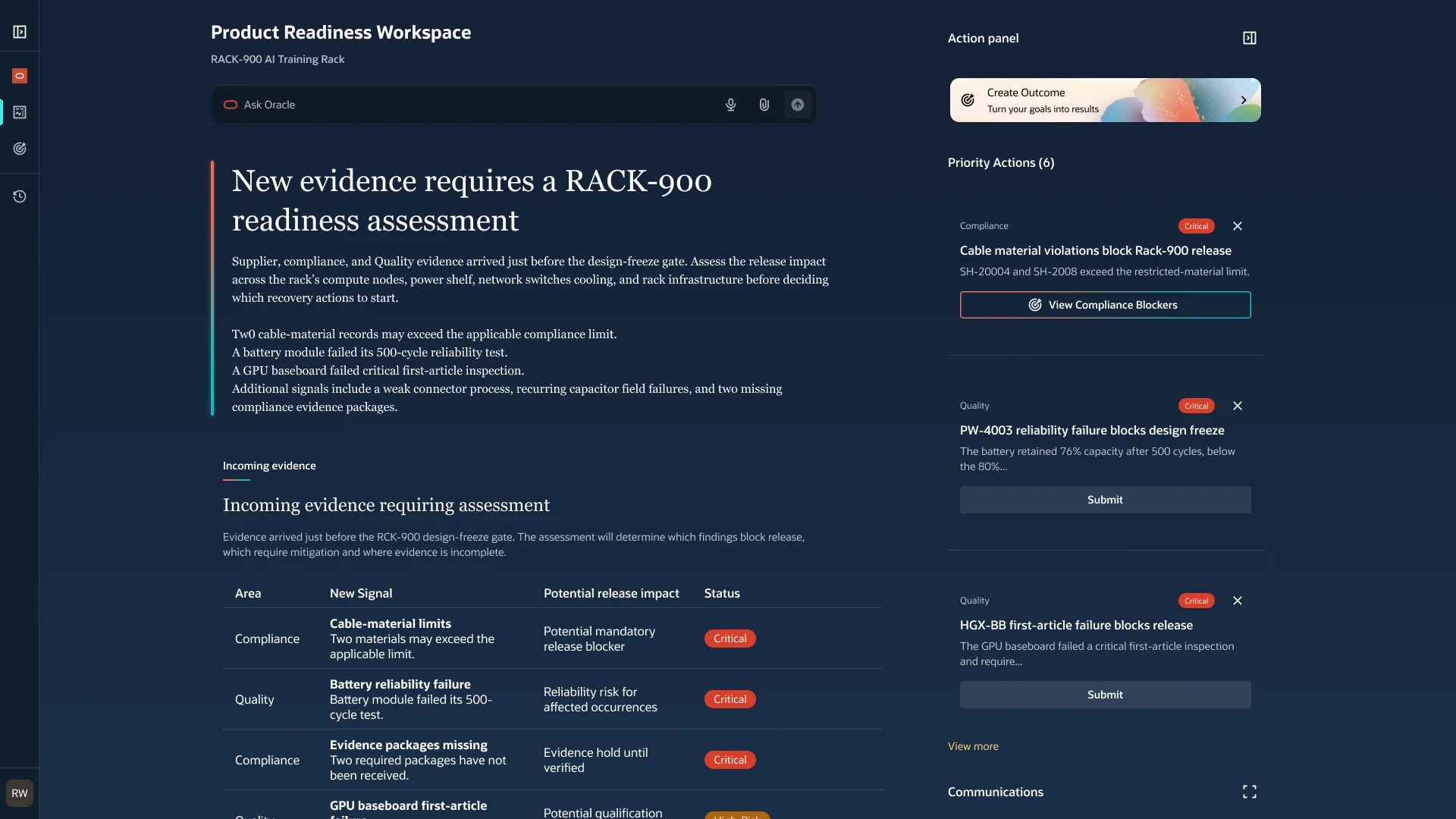
Exhibit: read it in the chapter.
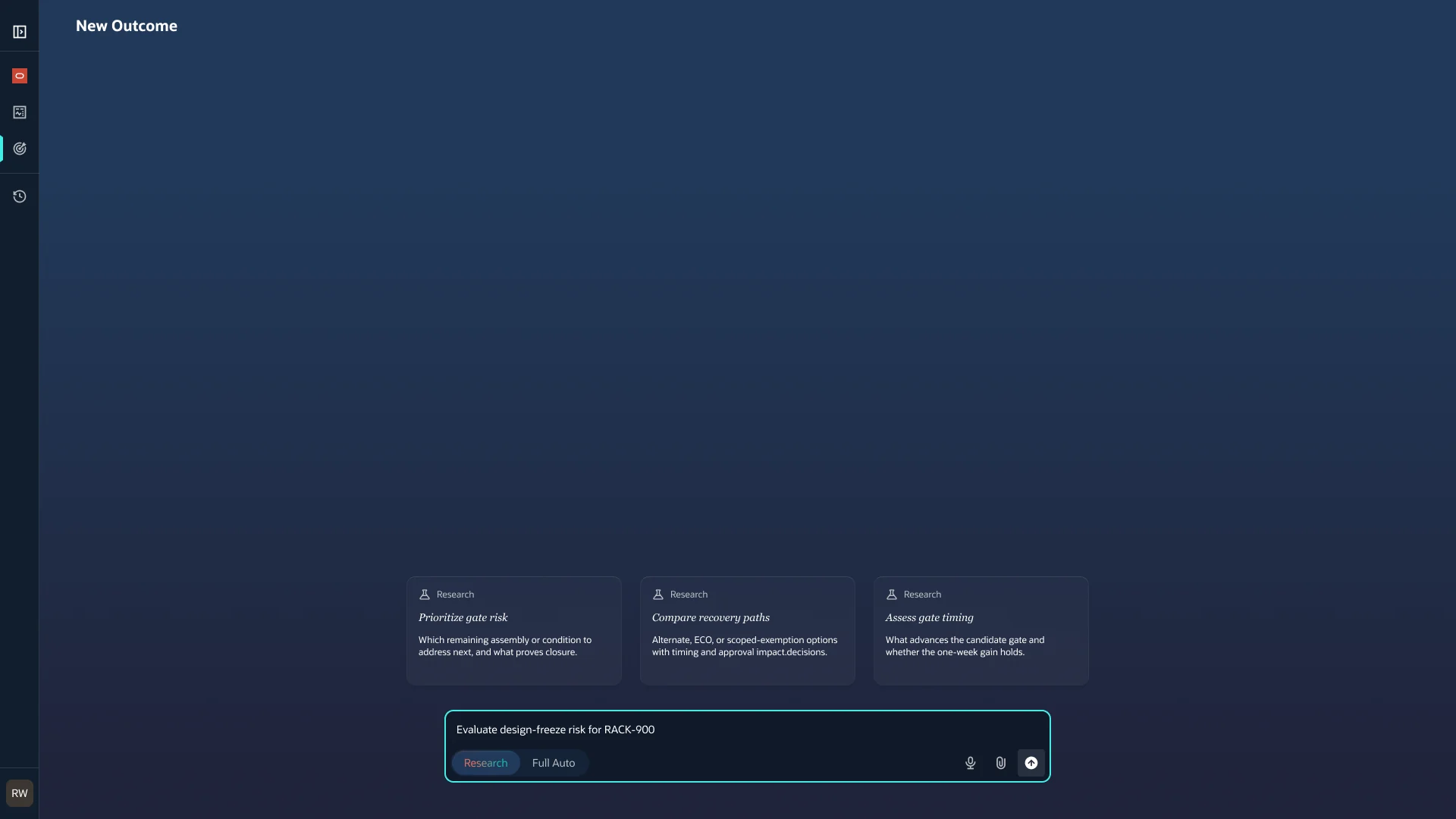
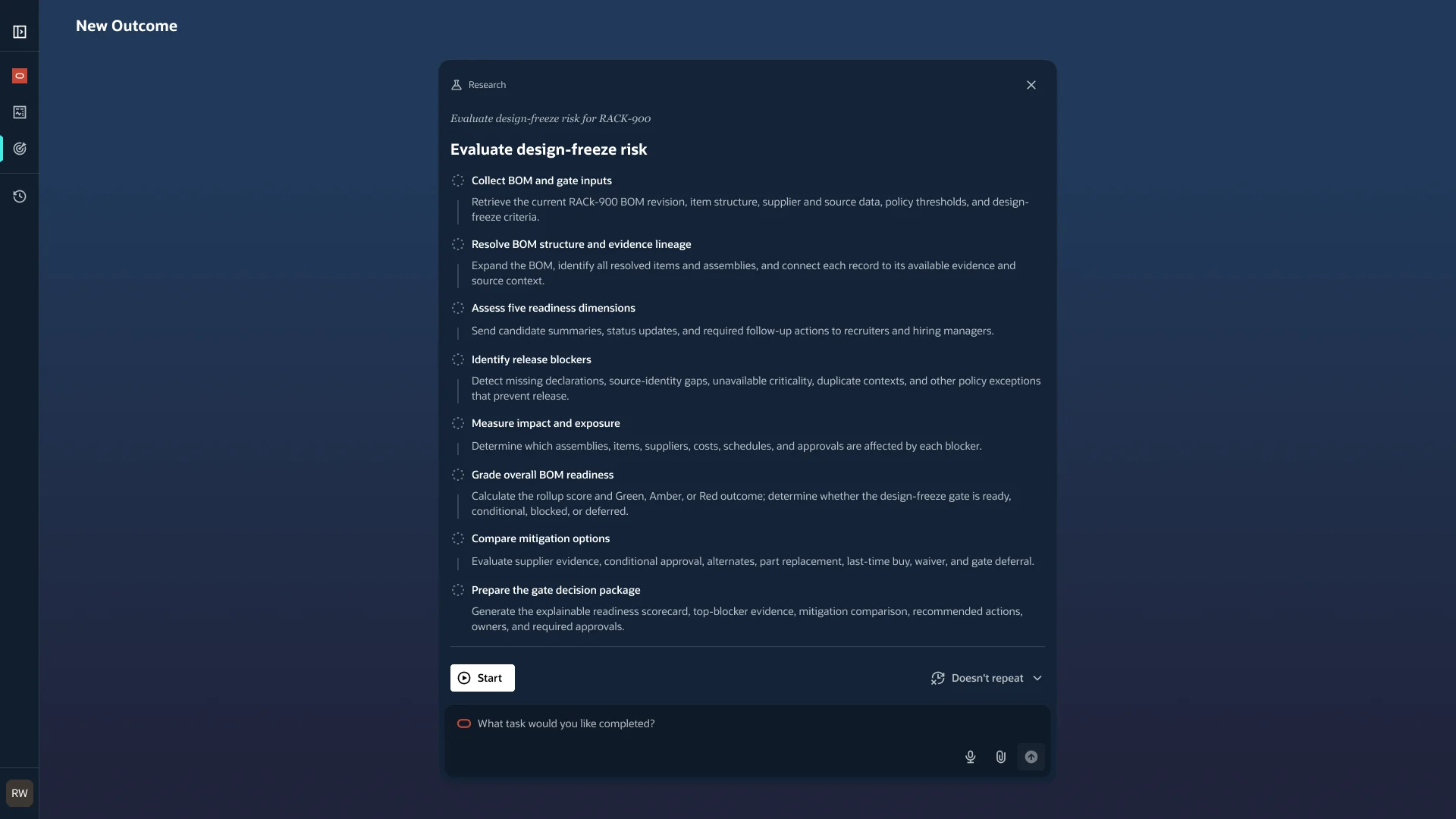
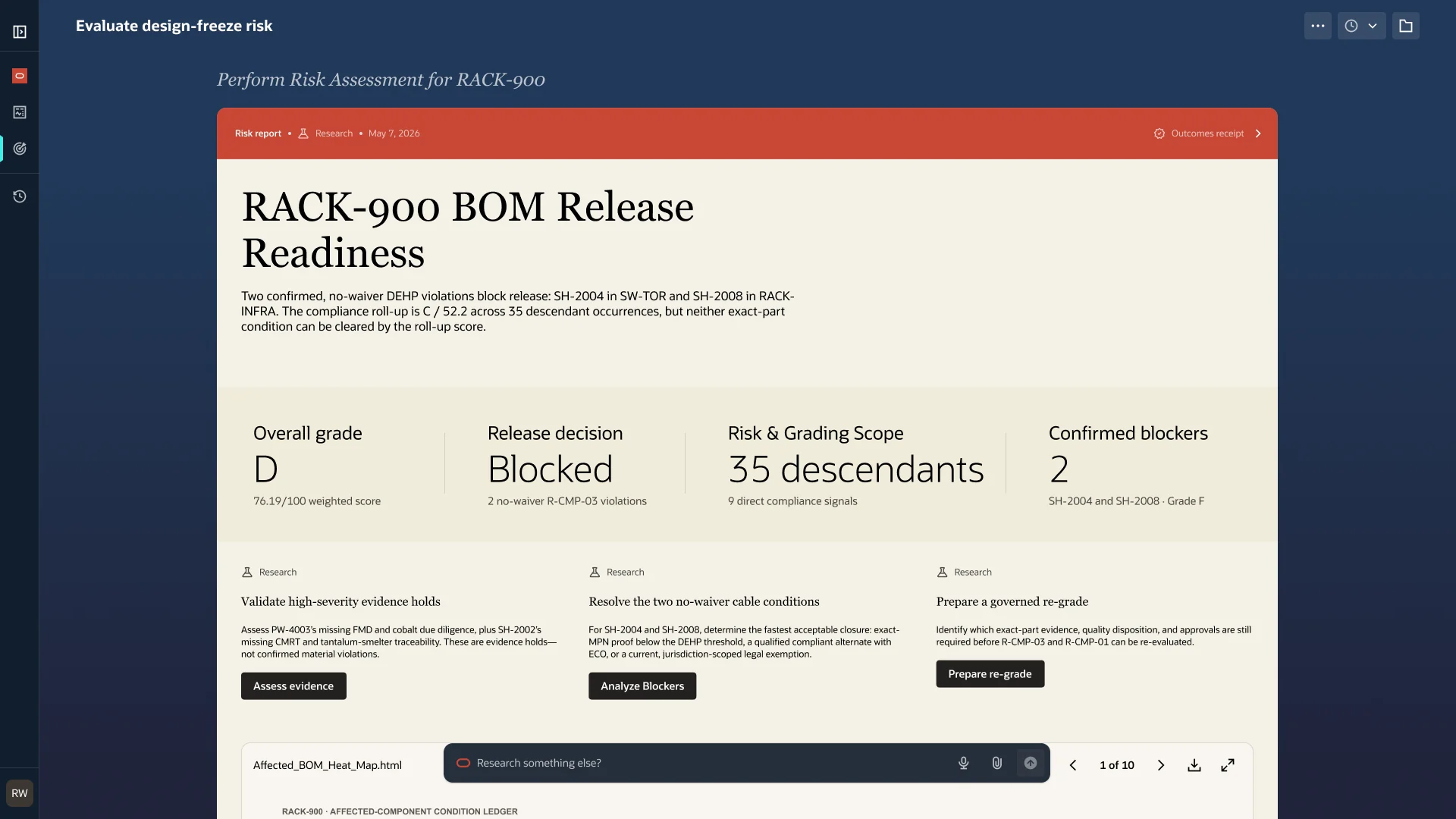
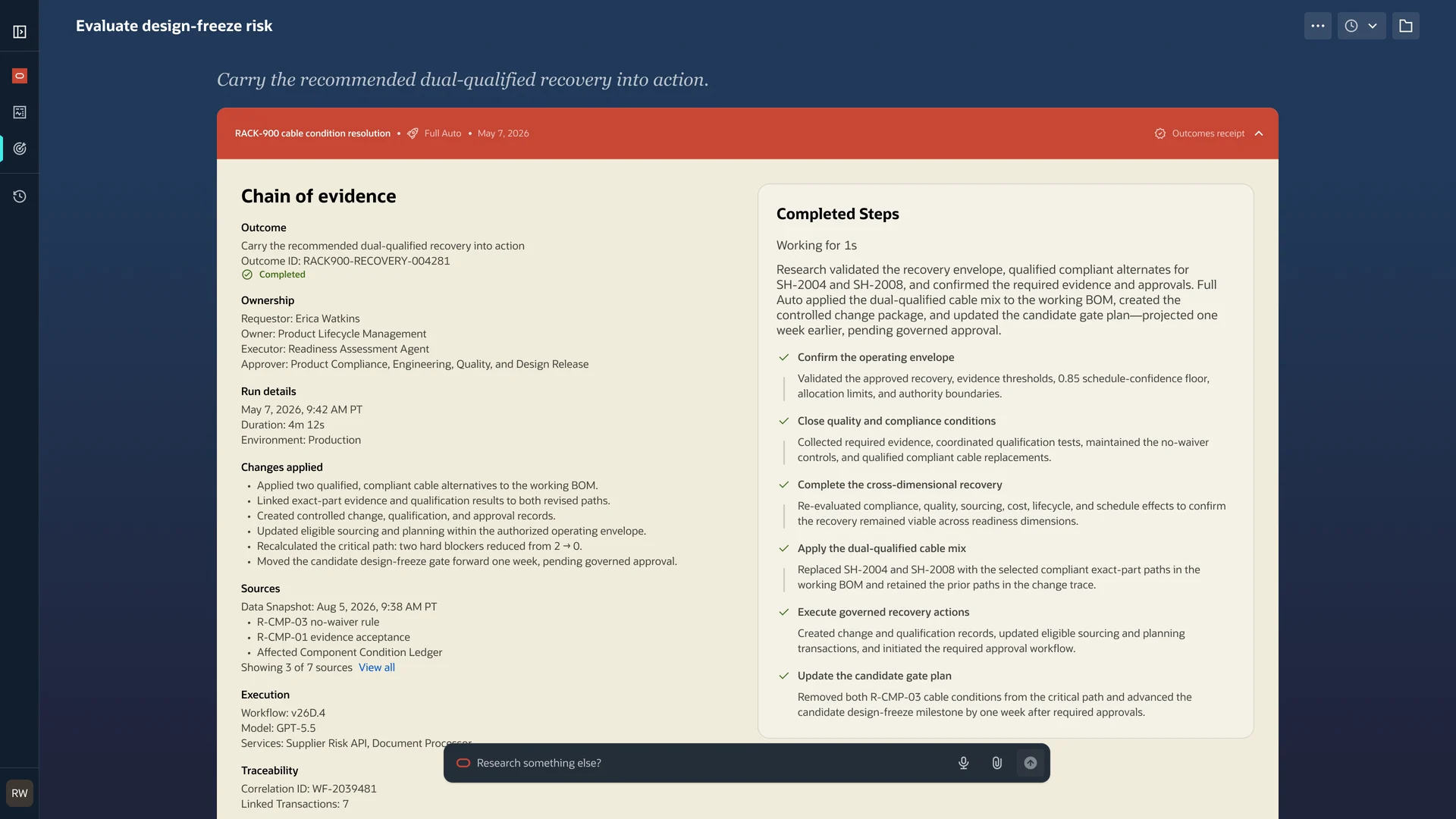
Pattern spec · AGT-03
Traceability
The anatomy of a single agent claim. Every part exists so a person in a gate meeting can challenge it, and reach the record that settles the argument.
Sourcing is exposed on the cable assembly. Single-sourced; supplier under a stop-ship notice.
Red · blocker
Evidence
- supplier-notice.pdf · p.2
- sourcing-record · row 214
- checked 07:41 today
Why this grade? Opens the full chain, claim to source document.
Decision belongs to the gate owner: the agent researched this; it doesn't approve it.
-
1
The claim.
One sentence, specific enough to be wrong.
-
2
The grade.
Red never averages into a passing score. A weighted number is how fatal issues hide.
-
3
The evidence.
The records that say so, with their freshness, not a summary of them.
-
4
The chain.
Every “why?” resolves to a source a person can open mid-meeting.
-
5
The owner.
A named human role holds the decision. The agent researches everything and approves nothing.
Illustrative content · pattern, not product UI.
Exhibit: read it in the chapter.
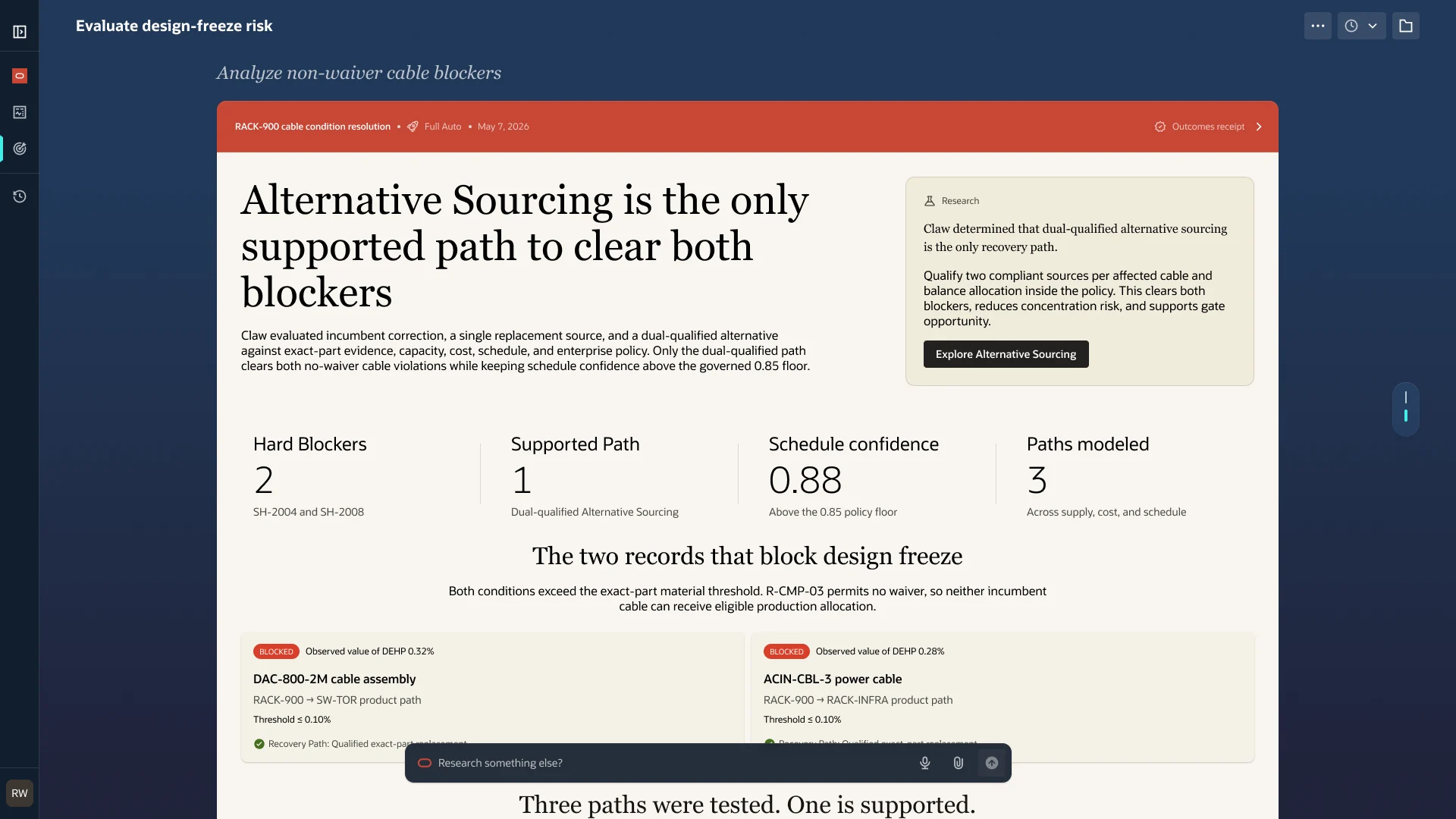
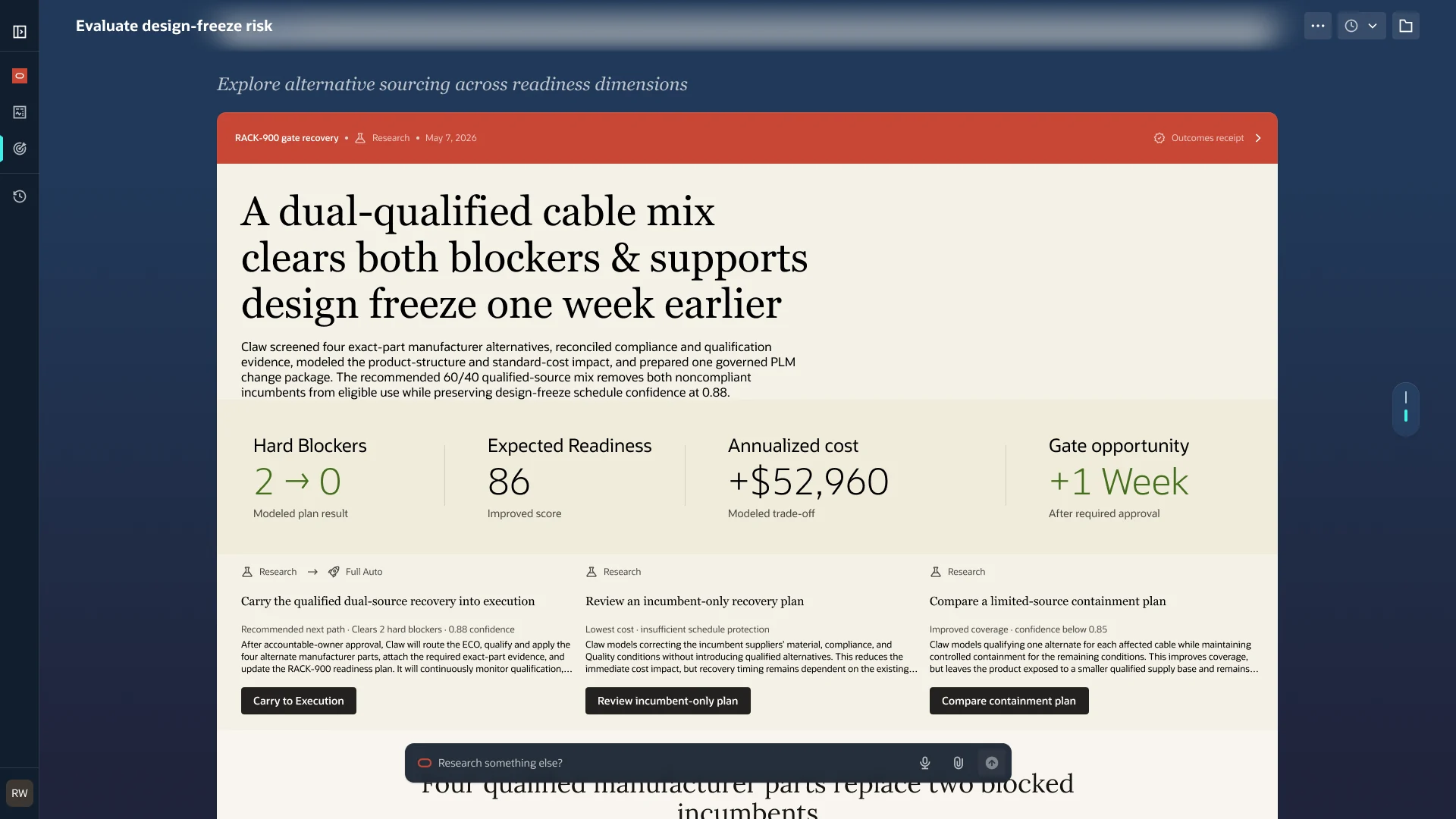
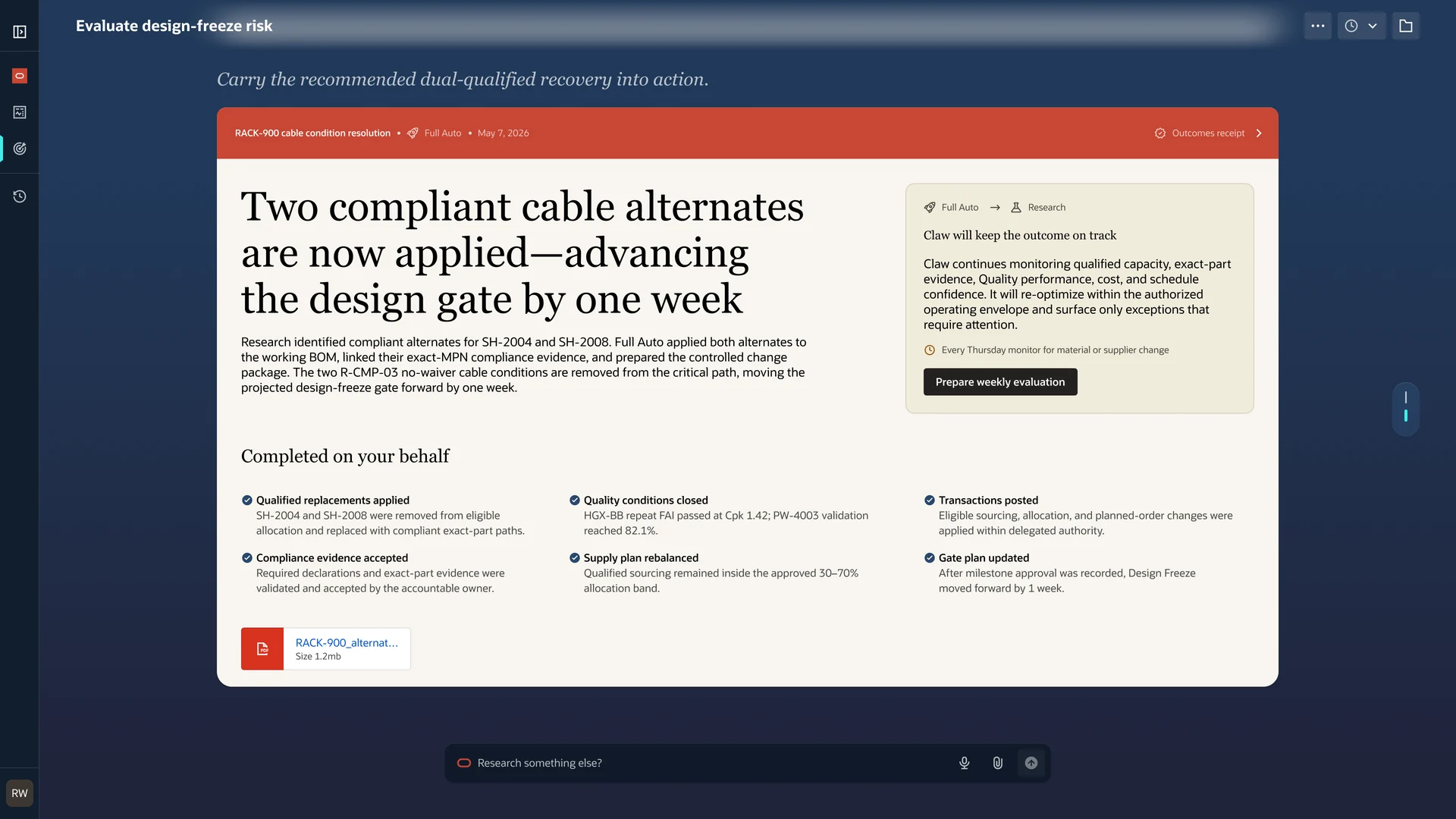
Pattern spec · AGT-02
Conversation
Every reply resolves to one of four states. Which state isn't a style choice; it's decided by what the evidence supports and who owns the decision.
-
01
Evidence supports a claim
Answer
States the claim with its source attached. Asked why, it produces the citation, never a restatement of itself.
Tone: a competent analyst. Nothing phrased to soothe.
-
02
The ask is ambiguous
Repair
Names the ambiguity it hit and offers candidate readings with its analysis: a specific question, not a shrug.
Conversation state survives the repair; work resumes where it stopped.
-
03
Outside its authority
Escalate
Hands off using the decision-rights grid: this finding, this owner, this decision. Never an escalation to “someone.”
Design changes, supplier picks, waivers, gates: humans own all four.
-
04
Against its rules
Refuse
Refuses to average a fatal issue into a passing score, and refuses to decide for the owner. Each refusal names what it won't do, and who can.
A refusal still has to leave the person somewhere useful, which means naming who can answer it.
Fallback rule: degrade honestly. When evidence is missing, the affected dimension surfaces as unassessed with the gap named. A confident guess is the failure mode this system exists to end.
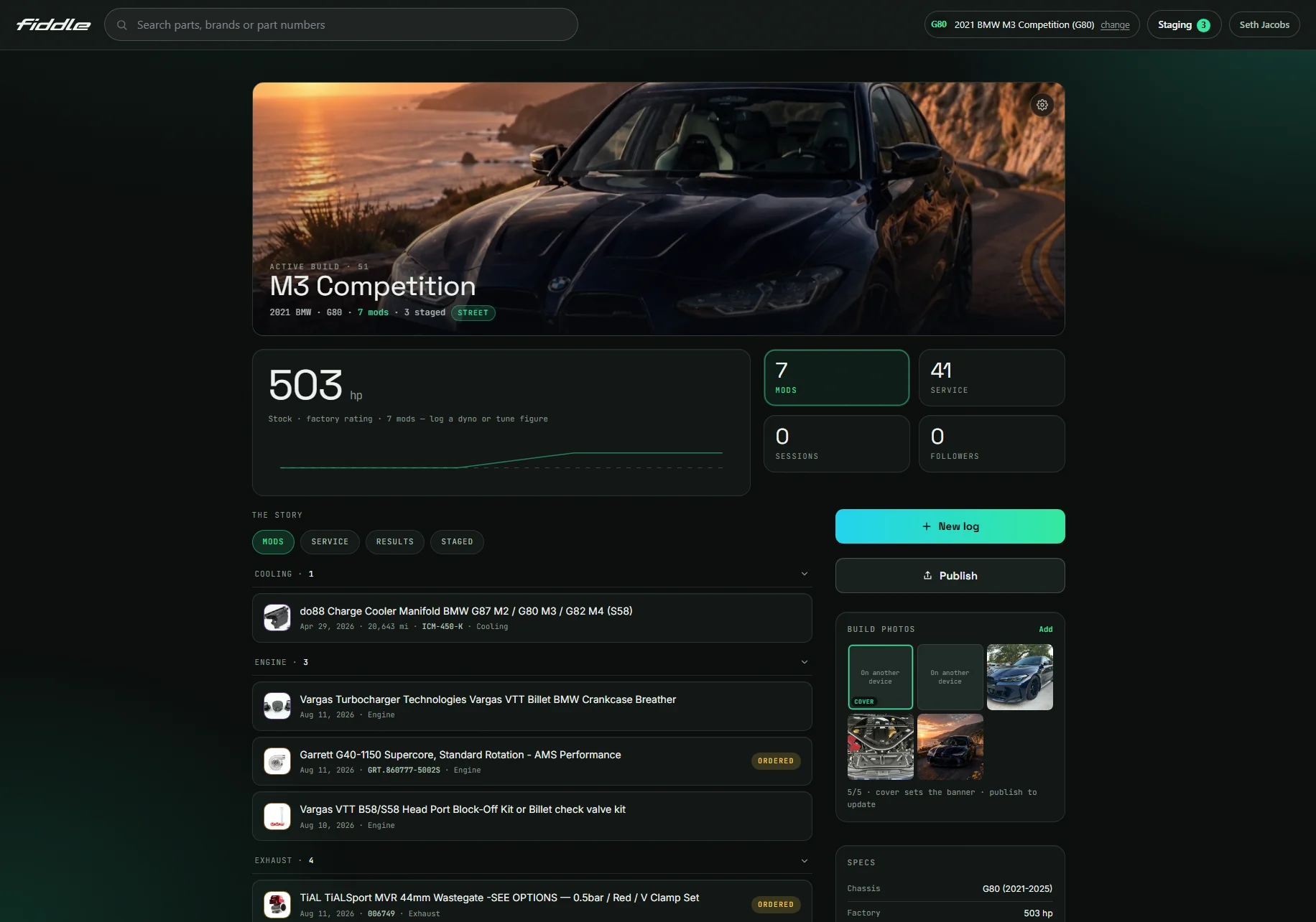
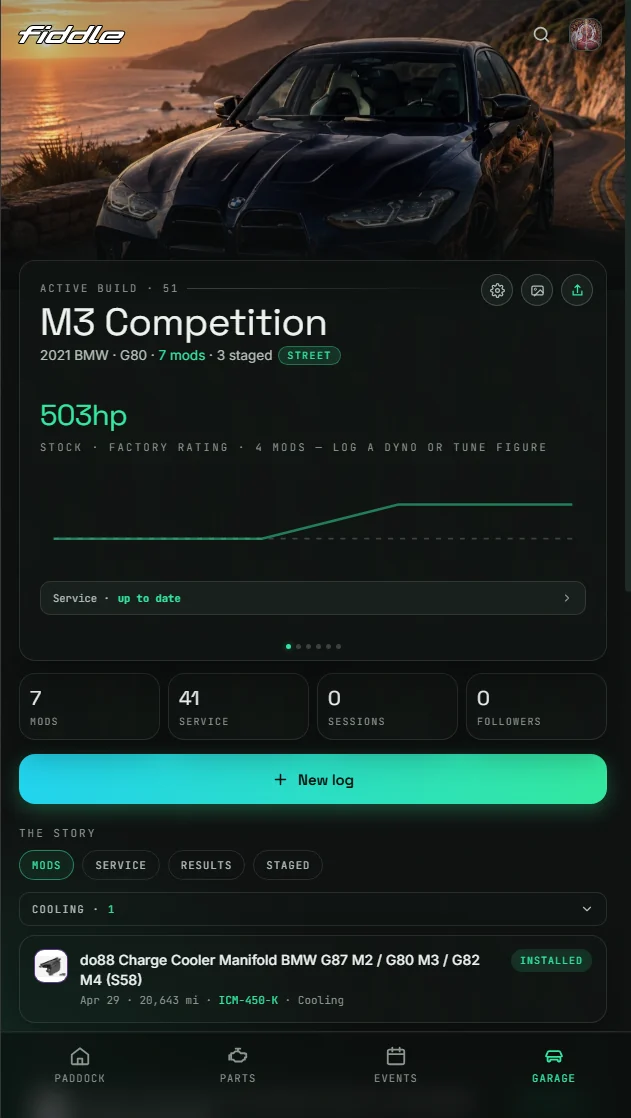
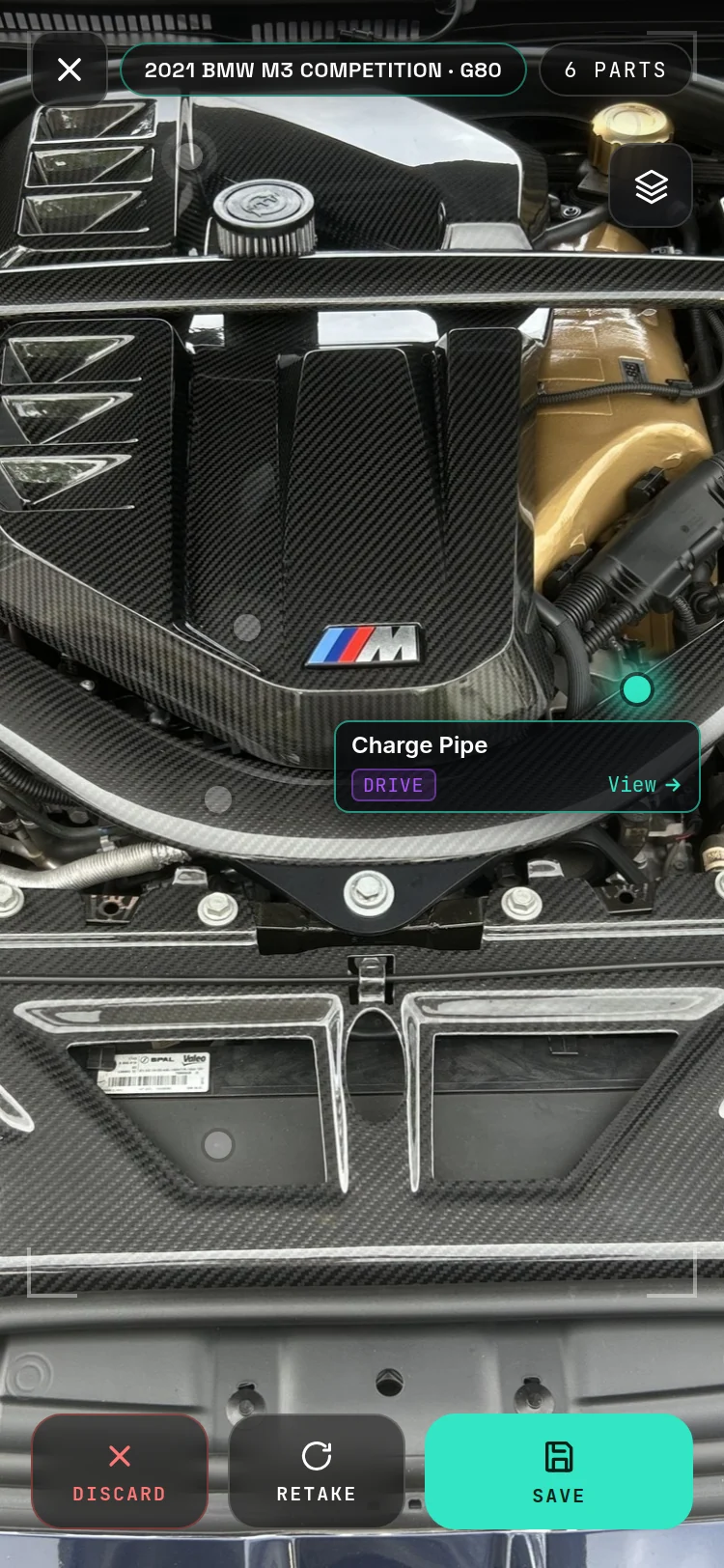
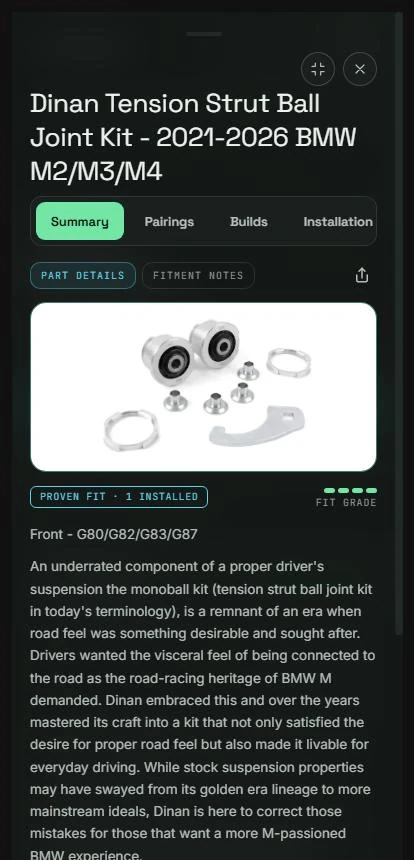
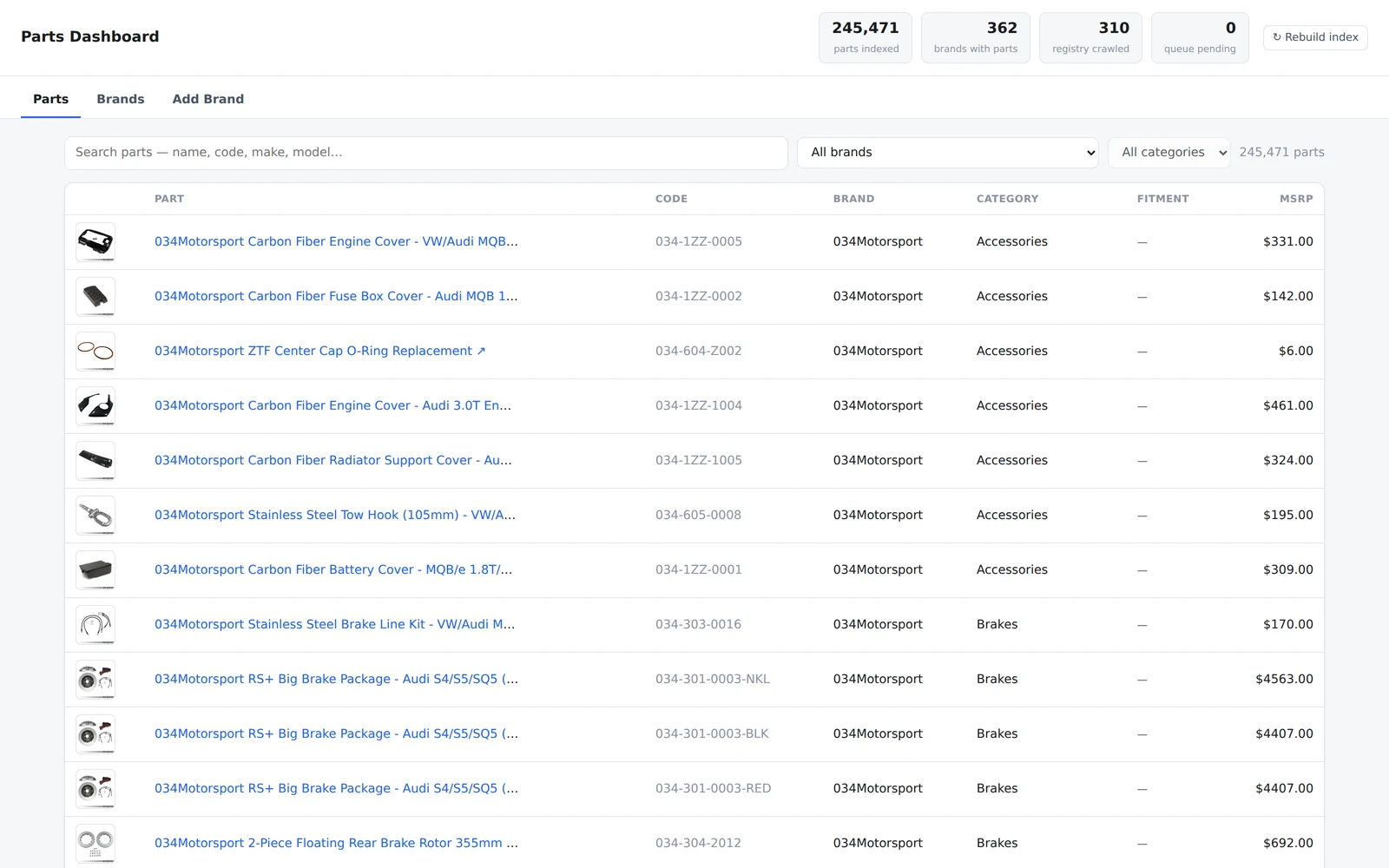
Proposed screen · Fiddle
Not yet shipped · Aug 2026 registry snapshot
parts indexed
245,471
photos, fitment, provenance
brands with parts
362
in the searchable index
brands tracked
471
registry, all tiers
deferred
153
each with an evidenced cause
Every bar resolves to its evidence in the registry, the same rule as everywhere else in Fiddle: no claim without a record behind it.
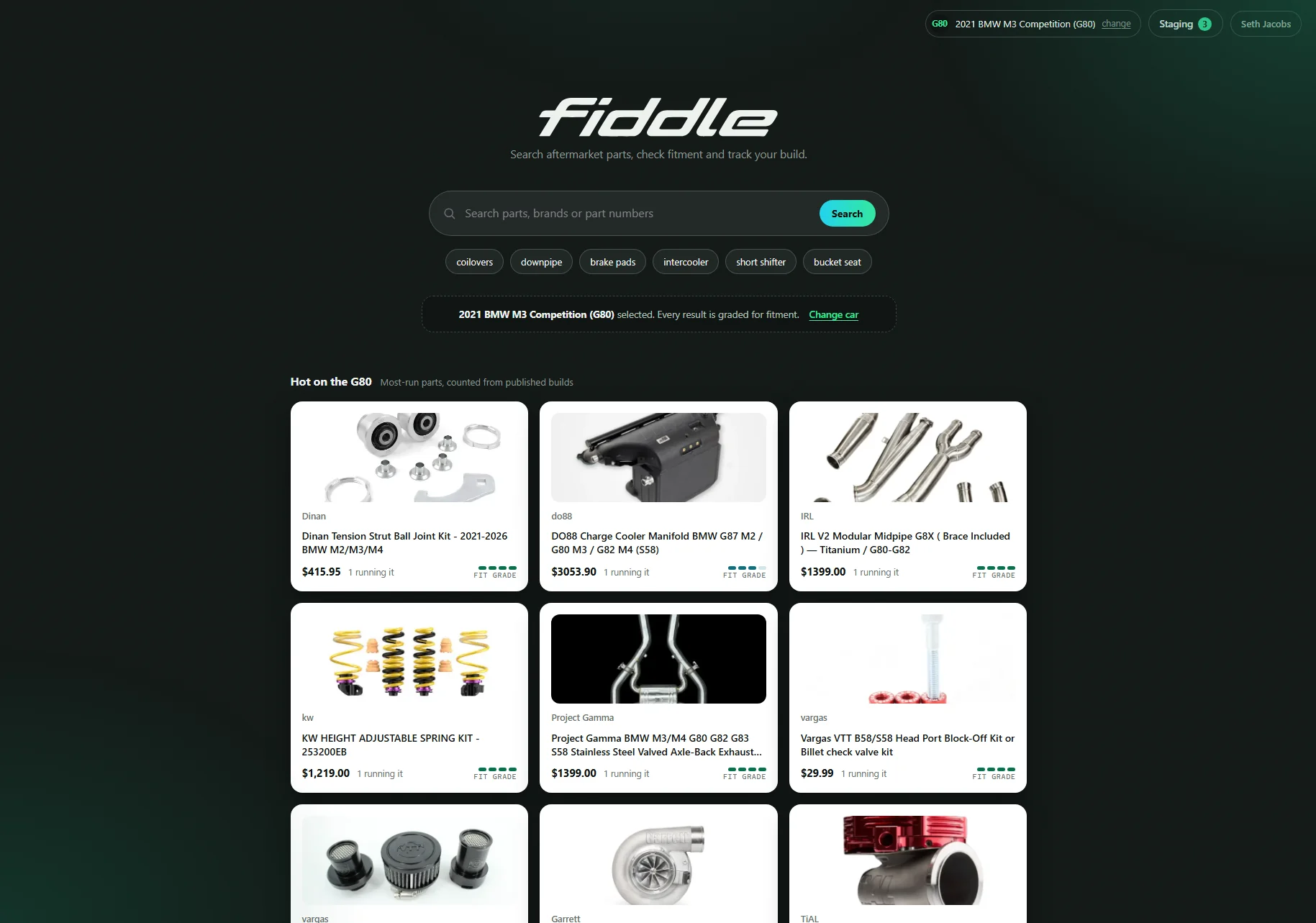
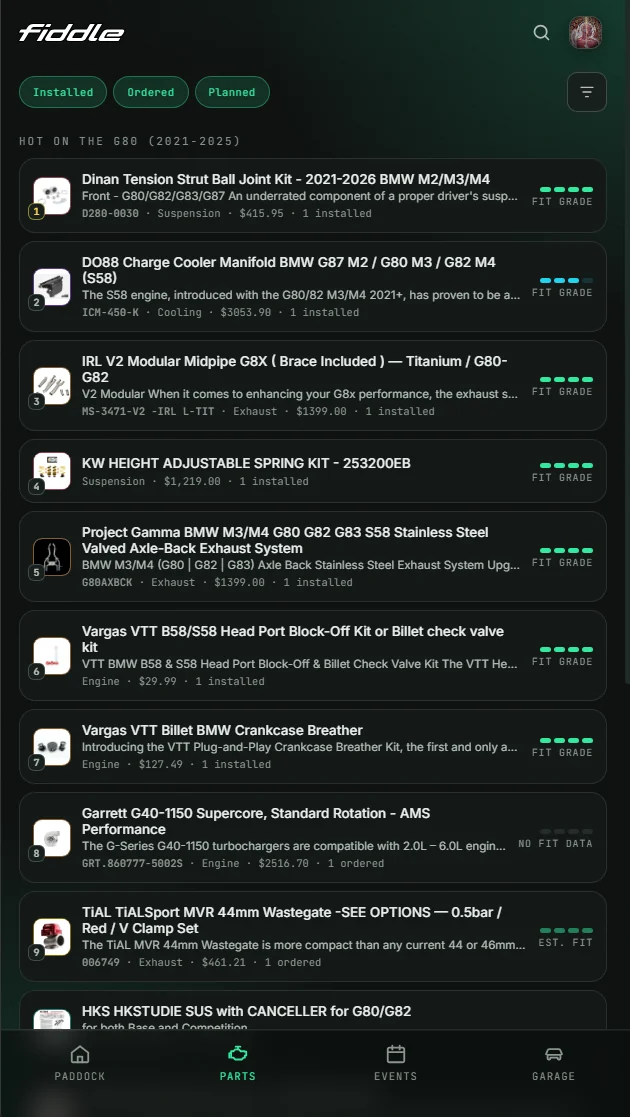
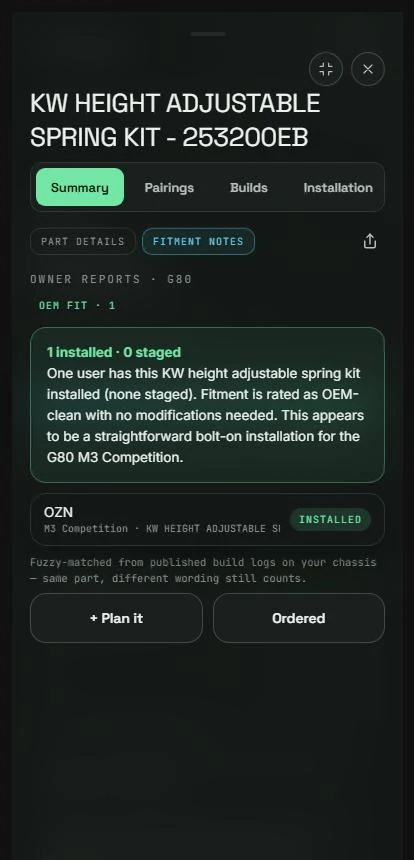
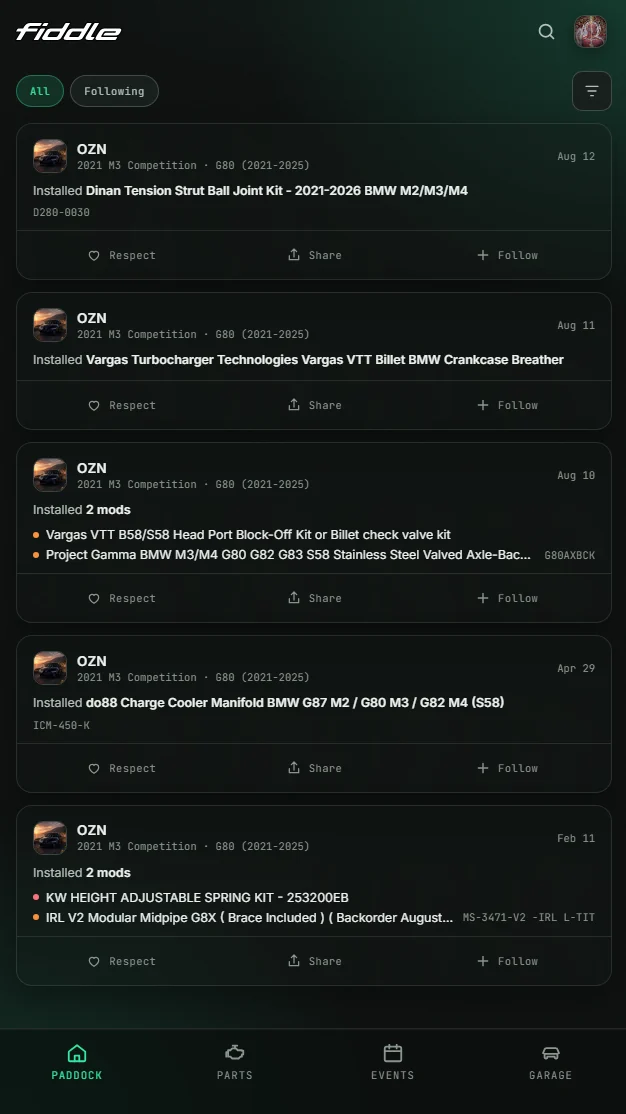
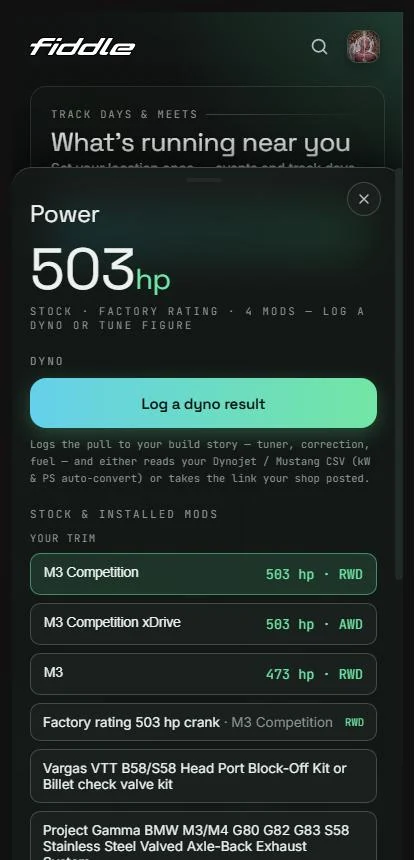

Exhibit: read it in the chapter.
Exhibit: read it in the chapter.
Exhibit: read it in the chapter.
System diagram · OW-01
Orb-Weaver pipeline
How roughly 400 independent storefronts with no shared format became one queryable index. A cheap probe reads each site first and decides the rung. A browser only ever spins up when the evidence says it must.
-
R1
Shopify feed Cheapest
Structured JSON, no browser at all.
-
R2
Sitemap + JSON-LD
The structured data the site already publishes.
-
R3
Platform harvester
BigCommerce, WooCommerce, Yahoo: written once, reused across stores.
-
R4
Bespoke template Last resort
Hand-written selectors. Expensive, non-scalable, last resort.
Three rules that carry the system
- Resumable beats fast: every step writes its outcome to the registry before the next begins.
- Verify from scratch: validators re-derive from source; a system that grades its own homework will pass.
- Say what you are: identifies itself, honors robots.txt, records why a site can't be harvested.
471
brands tracked
310
crawled successfully
245,471
parts indexed
153 brands deferred, every one with an evidenced cause in the registry.
Acts alone
- Probe decisions
- Feed harvesting
- Quality scoring
- Fitment computation
- Index rebuilds
Stops & asks
- Deleting a row
- Blockers without evidence
- Writing a template
- Seeding failed manifests
The pipeline is allowed to reach a wrong conclusion. It isn't allowed to act on one.
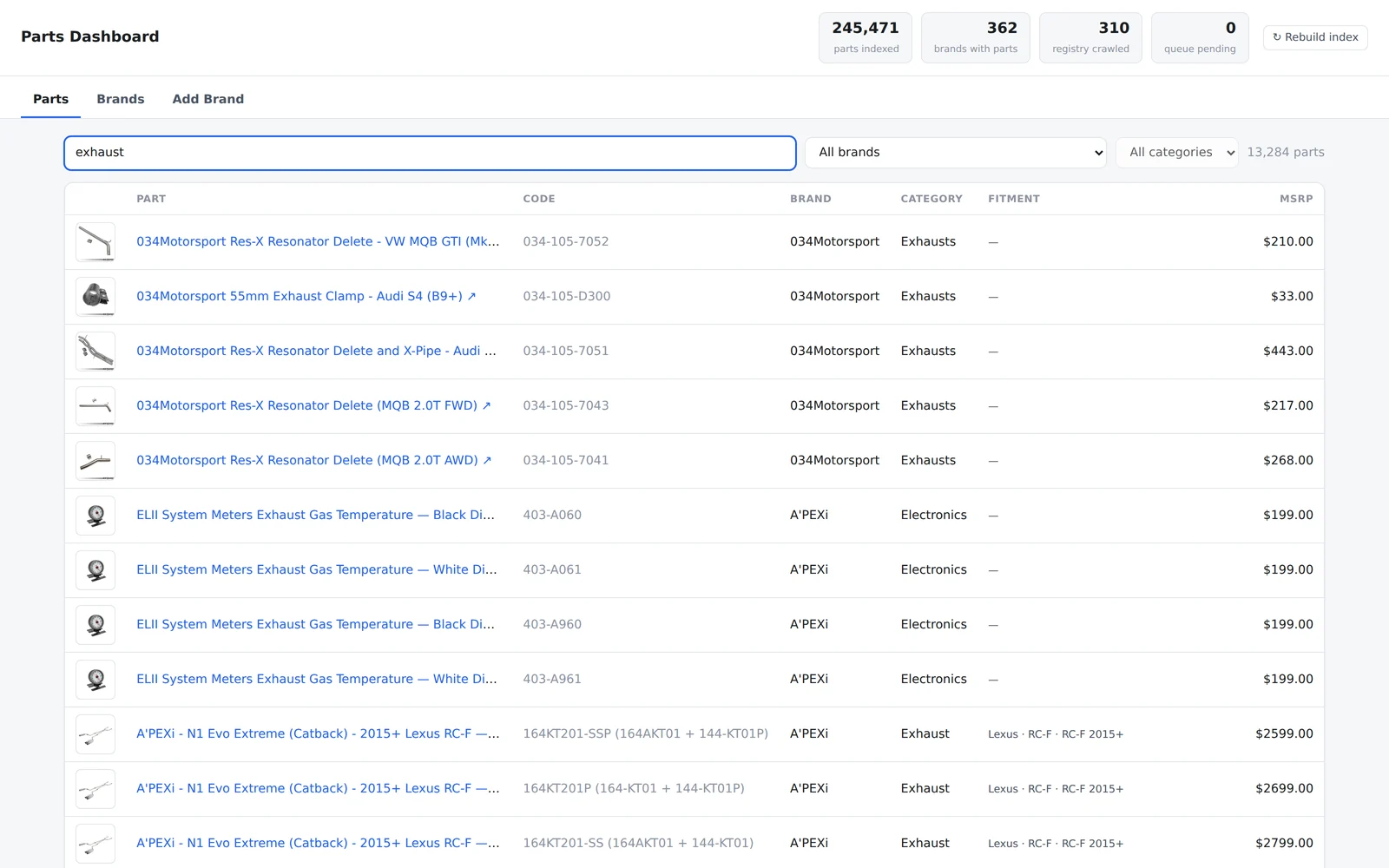
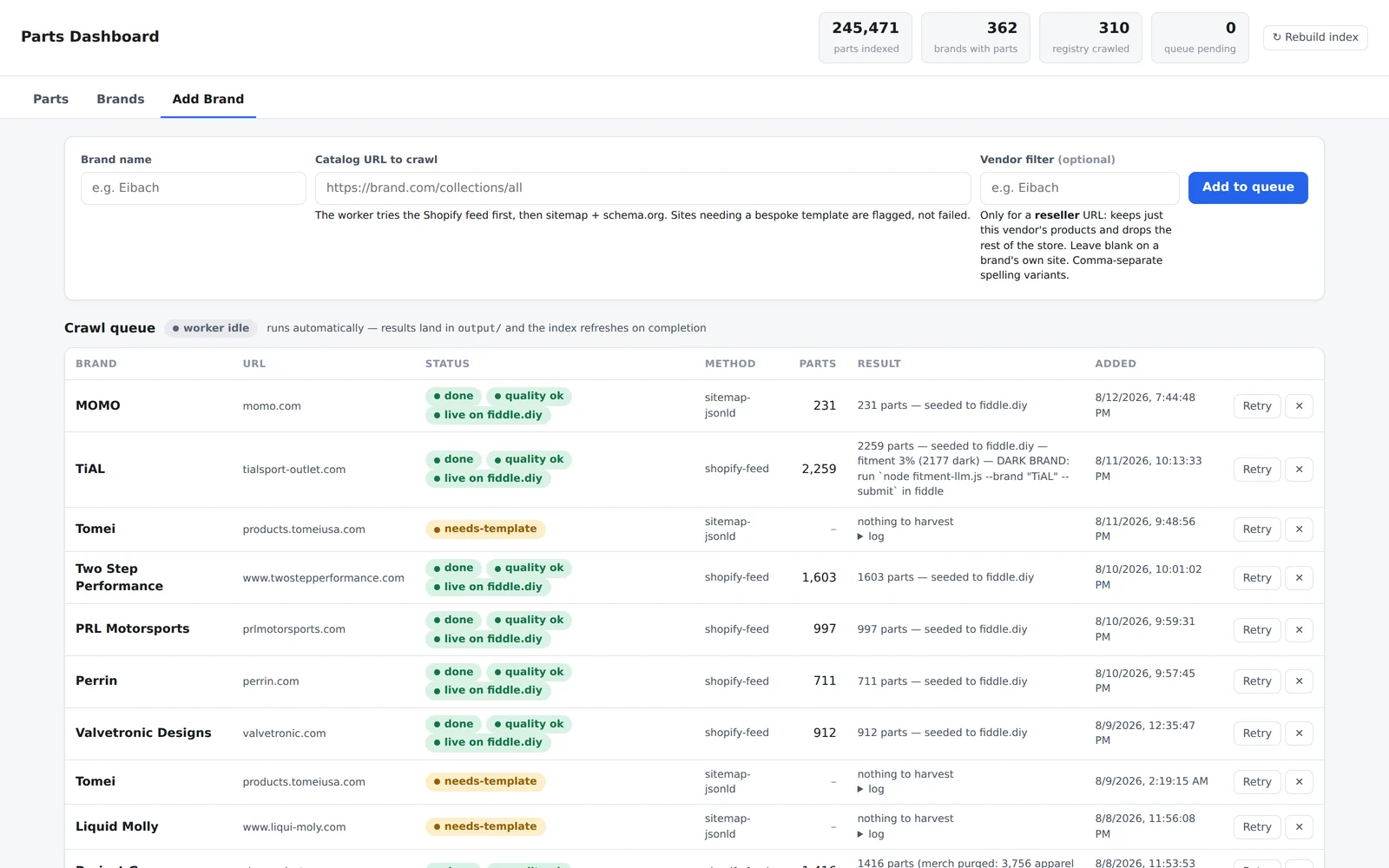
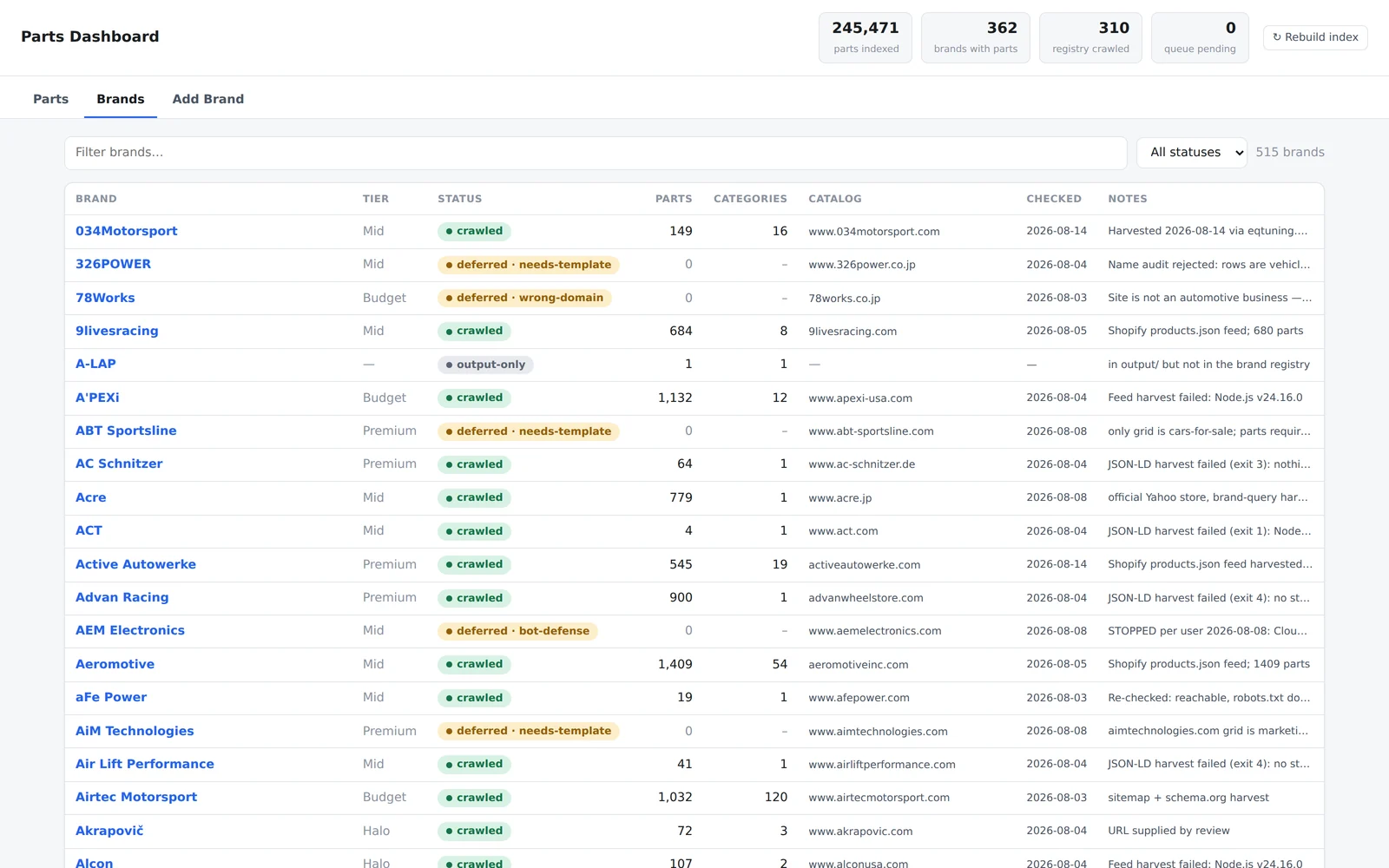
Exhibit: read it in the chapter.
Exhibit: read it in the chapter.
95 plates across 17 projects.